
Less than 1% of revenue, but major risks.
Italy is the EU’s largest importer: more than 580,000 reptile skins in 2022, including over 227,000 water monitor lizards caught in the wild. We call on Hermès, Louis Vuitton, Dior, Fendi, Loro Piana, Gucci, Bottega Veneta and Prada to exit the supply chain by 2030.
We published the report “Exotic skins – the next-gen transition at equal value”, addressed to the leadership of luxury brands that still use exotic skins, and calls for specific commitments with verifiable deadlines.
Little value, many risks. According to our conservative estimate, the exotic line accounts for less than 0.5–1% of a major luxury group’s revenue. Total EU imports of reptile skins and reptile leather goods (around €867 million in 2022) amount to roughly 0.2% of the global personal luxury goods market. Against this, CITES compliance alone costs between €100,000 and €400,000 a year per programme. Between 2016 and 2021, US authorities seized almost 200 shipments of reptile leather goods, including shipments linked to Hermès, Louis Vuitton and Gucci, and in 2024–2025 numerous seizures also took place in Italy. On top of this come the US lawsuit against Gucci over its “ethical” claims and the EU Digital Product Passport.
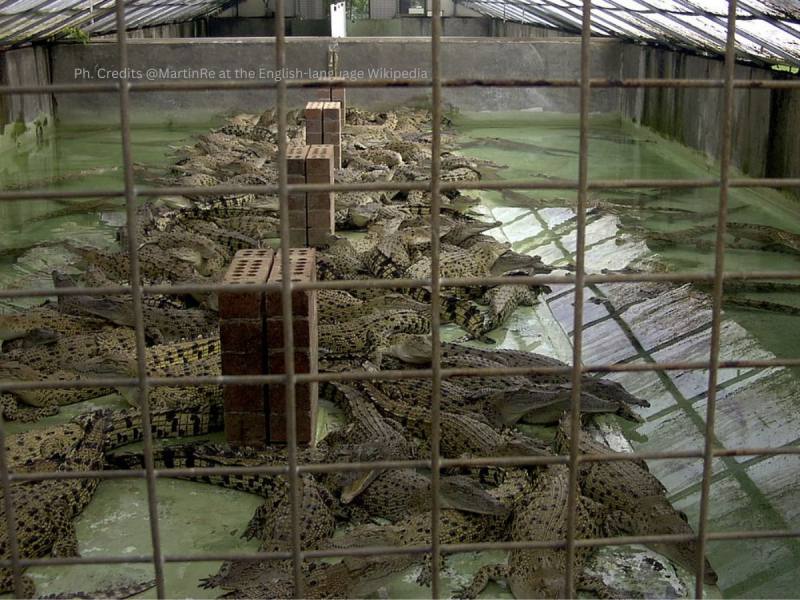 Italy, Europe’s largest importer. In 2022 Italy imported 580,872 whole reptile skins, around 42% of the EU total, up from about 370,000 in 2018. Among them were more than 227,000 water monitor lizards, a species with no commercial farming, all caught in the wild. The killing of reptiles is governed only by the non-binding recommendations of the WOAH Terrestrial Animal Health Code (formerly OIE), which classifies as unacceptable methods such as skinning alive, exsanguination and freezing, historically the most widespread in the industry.
Species hidden from customers. On the official online stores, only Hermès explicitly states the species used. Prada’s product page for the Brique bag is titled “crocodile leather bag” but lists the material as “American Alligator”, a species that is not a crocodile.
The market is already moving. Chanel, Burberry and Marc Jacobs have dropped exotic skins. LuxExperience B.V. (Mytheresa, Net-a-Porter, Mr Porter, Yoox, The Outnet) bans their sale from Fall/Winter 2026, under a policy developed with us and Humane World for Animals. Kering has announced a 30% reduction in its reliance on leather by 2028.
Our demands to brands:
For the major luxury groups, exotic skins are a marginal source of revenue, but not a marginal source of risk. Behind that line are hundreds of thousands of sentient beings, most of them caught in the wild and killed without any binding protection. The fur-free transition has shown that luxury can give up an animal-derived material without losing value. The question is no longer whether this transition will happen, but which fashion house will choose to lead it and which will end up having it imposed.